Large organizations · Reverse engineering
Legacy reverse engineering: your systems, readable again.
Your system runs and carries rules worth keeping. The AI reads all of it; your experts and our team validate every result.
A dedicated offer for large enterprises, mid-market companies and public bodies: rebuilt documentation, extracted business rules, mapped dependencies, then a modernization path that keeps what runs running. All of it is fully included in the AIR.TEK subscription.
Fictional example. Every result points back to the code it comes from.
The situation
It runs the business. Few people still understand it.
The people who know the system retire or move on. What they know is written down nowhere.
The code has changed for years; the documentation, where it exists, still describes the first version.
Pricing, discounts, checks, regulatory calculations: the rules that run the business live only in the programs.
Nobody dares touch a program whose dependencies no one fully knows. Modernization keeps waiting.
What AIR.TEK does
The AI reads the code. Your experts validate.
A complete analysis of your application estate, carried out by AI and checked by people, result by result.
Programs, screens, stored procedures, database schemas, exchange files and job chains: the AI goes through all of it.
For each module: what it does, what it reads, what it writes, what calls it. Documentation your teams can read, not just specialists.
Calculations, checks, pricing, exceptions: each rule buried in the code is written in plain language and linked to the place in the code it comes from.
Links between programs, tables, interfaces and batch jobs: you see what depends on what before anything is touched.
Programs never called, duplicates, fragile areas, jobs nobody knows how to rerun anymore: flagged, so you decide what to do with them.
Wrap behind APIs, migrate step by step or rewrite module by module: a reasoned proposal, with the legacy system kept running.
The principle
Assisted analysis. Not automatic conversion.
On old code, changed over many years, nothing can be guessed with certainty. The AI proposes; every result is reviewed and validated by people before it is used. Whatever remains uncertain is flagged as such.
It reads all of the code and data, then proposes the documentation, the rules and the dependency map.
The people who know the business confirm, correct or complete. Their knowledge is finally written down.
It cross-checks every result against the code and the data, and tells you what still needs confirming.
Modernization
Modernize without stopping what runs.
The choice is made with you, module by module, based on risk and your priorities. The existing system keeps running throughout.
- 1Wrap behind APIs
The system stays in place; its functions become available to your new tools, portals and applications.
- 2Migrate step by step
Data and processing move gradually to a new platform, with a check at every step.
- 3Rewrite module by module
Each module is rewritten from its validated rules, then replaces the old one once your teams have verified its results.
Confidentiality
AIR.TEK Sovereign
Your code stays on your premises.
The source code and data of a legacy system are among an organization’s most sensitive assets. With AIR.TEK Sovereign, the whole analysis runs on a SABER server installed on your premises: nothing leaves the company.
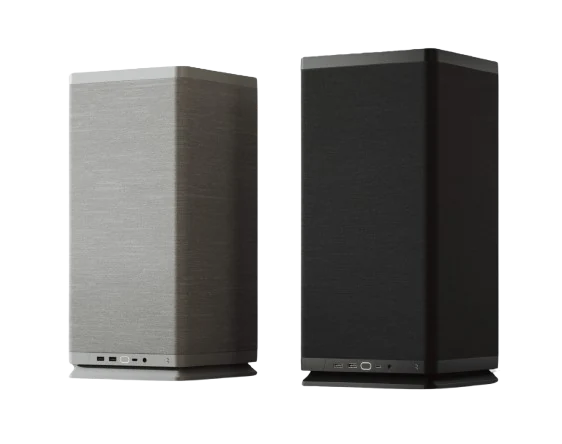
The AI runs on the SABER server, on your network. Code and data stay with you.
The server contacts nothing outside: all traffic starts from your network.
Your code and data are entrusted to no one else.
The subscription
Fully included in the AIR.TEK subscription.
Reverse engineering your legacy systems is not a separate project with its own quote. It is fully included in the AIR.TEK subscription, just like development, ERP, CRM and AI.
Analyzing your existing systems is part of the subscription: no separate project to fund.
The people who read your system build what comes next: APIs, migration, new modules.
Documentation, business rules and dependency maps are delivered to your teams and serve them every day.
Questions
Your questions, answered.
Does our source code or data leave our premises?
Not if you don’t want it to. With AIR.TEK Sovereign, the whole analysis runs on a SABER server installed on your premises: code and data never leave the company. If your requirements allow it, it can also run in the cloud or in a sovereign cloud.
Which languages and technologies do you analyze?
The ones most common in large organizations: COBOL and RPG on mainframe or AS400 (IBM i), PL/SQL, Visual Basic 6, Delphi, Access, older ERPs and undocumented in-house applications. The analysis covers the code, but also database schemas, exchange files and batch jobs. For a rarer technology, let’s talk about it on the discovery call.
Does our current system keep running?
Yes. The analysis is read-only: it changes nothing in your system. Modernization then happens in steps, and the existing system stays in service until whatever replaces it has been validated by your teams.
Who validates the results?
Your business and technical experts, together with our team. The AI proposes the documentation, the rules and the dependency map; every result is reviewed, corrected where needed, then validated by people. It is assisted analysis, not automatic conversion: whatever remains uncertain is flagged as such.
What exactly do you deliver?
Rebuilt documentation, module by module; business rules in plain language, each linked to the code it comes from; a map of dependencies, interfaces and batch jobs; a list of dead code and risk areas; and a reasoned modernization path.
How is it included in the subscription?
Reverse engineering is fully included in the AIR.TEK subscription, just like development, ERP, CRM and AI. There is no separate quote for the analysis: the subscription amount is set out in a personalized proposal, built with you.
Is this an automatic conversion of our code?
No, and we don’t promise one. An automatic conversion does not guarantee that business rules are understood or preserved. We deliver AI-assisted analysis validated by people, then a step-by-step modernization, checked at every step.